

GHK-Cu, the copper peptide
A small copper-binding tripeptide with fifty years of research behind it, most of it in skin and collagen models.
What GHK-Cu is
GHK is a tripeptide: three amino acids, glycine, histidine and lysine (glycyl-L-histidyl-L-lysine). It binds copper(II) ions very tightly, and the copper complex is called GHK-Cu, often simply "copper peptide". The copper is why GHK-Cu powder and solutions have a characteristic blue colour.
GHK occurs naturally. It was first isolated from human plasma by Loren Pickart in 1973 and has since been found in saliva and urine as well. Published work reports that plasma GHK levels decline with age, which is one reason it became a subject of skin-ageing research. It is far smaller than the incretin peptides covered in our other guides: a molecular weight of roughly 340 for GHK, against about 4,800 for tirzepatide.
What the research looked at
Most GHK-Cu research sits in two areas: cell and tissue models of skin, and cosmetic science.
- Extracellular matrix: in fibroblast cultures, GHK-Cu has been studied for its effects on the synthesis of collagen, elastin and glycosaminoglycans, the structural components of skin, and on the enzymes that remodel them.
- Tissue-repair models: animal and in-vitro studies looked at GHK-Cu in models of skin repair, including its interaction with blood-vessel formation and inflammatory signalling.
- Gene-expression studies: later work used gene-expression databases to report that GHK is associated with changes in the activity of a large number of human genes, including ones linked to tissue remodelling and antioxidant responses. These are associations in datasets, not demonstrated outcomes.
- Copper transport: because it carries copper, GHK is studied as a way copper is delivered to cells, where copper is a cofactor for enzymes such as lysyl oxidase, which cross-links collagen.
Two reviews by Pickart and colleagues (2015 and 2018) summarise much of this work and are listed below. Much of the research comes from a small number of groups, and human data are limited, so it is best read as a research field rather than settled science.
GHK-Cu in cosmetic science
Outside the lab, GHK-Cu is one of the best-known peptides in cosmetic formulation. It appears in topical serums and creams, where it is listed on ingredient labels as "copper tripeptide-1". Cosmetic studies have assessed topical formulations for skin appearance measures such as texture and fine lines.
Research-grade GHK-Cu is a different product from a cosmetic serum. It is the raw peptide as a lyophilised powder, without a formulation, preservative system or cosmetic safety assessment. It is supplied for formulation research, analytical work and laboratory study.
How Friday supplies GHK-Cu
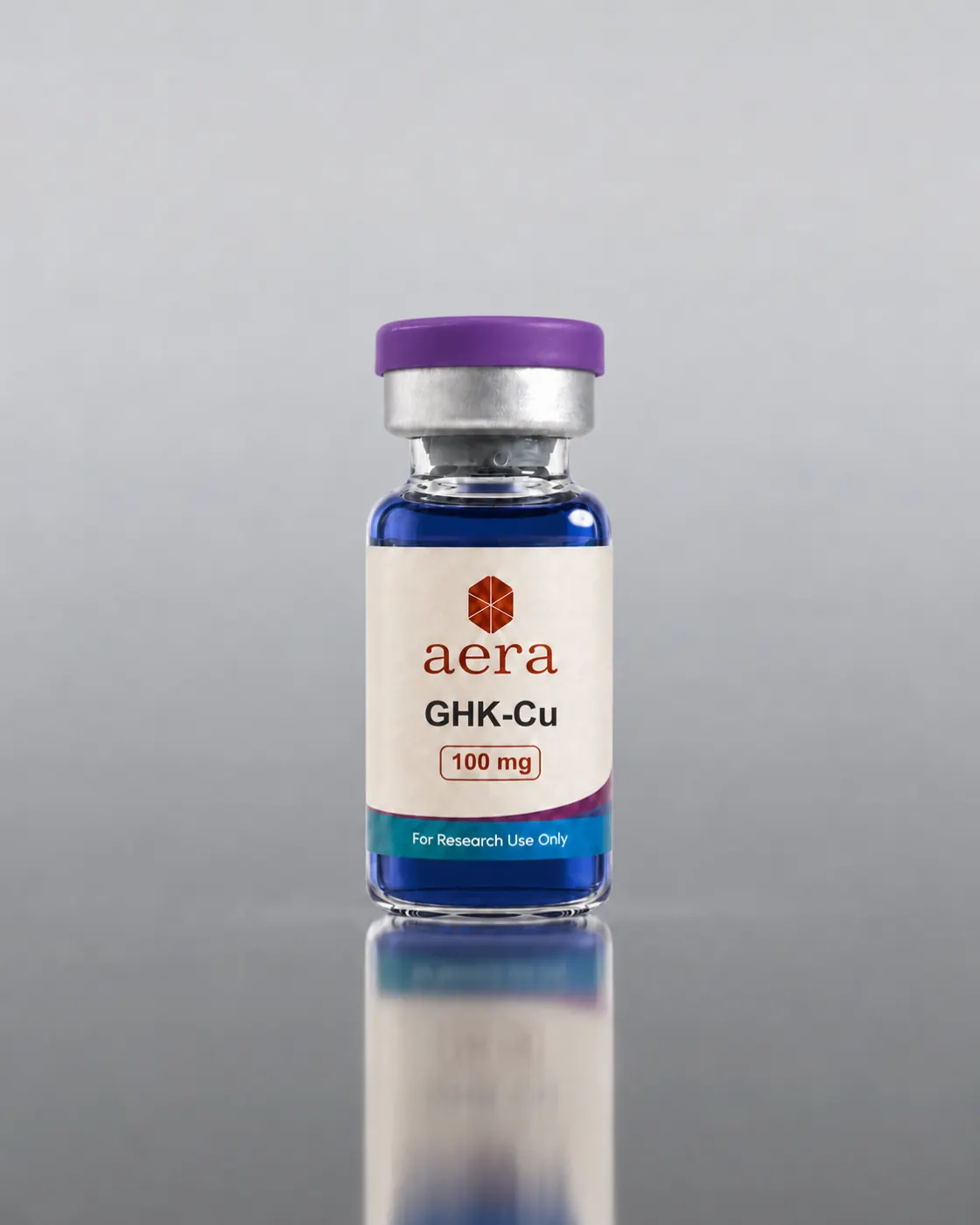
Friday stocks GHK-Cu as lyophilised powder in a sealed vial, in 100mg (฿1,090) vial. Because GHK is so small, GHK-Cu vials hold far more milligrams than incretin peptide vials; the strength on the label is the total content.
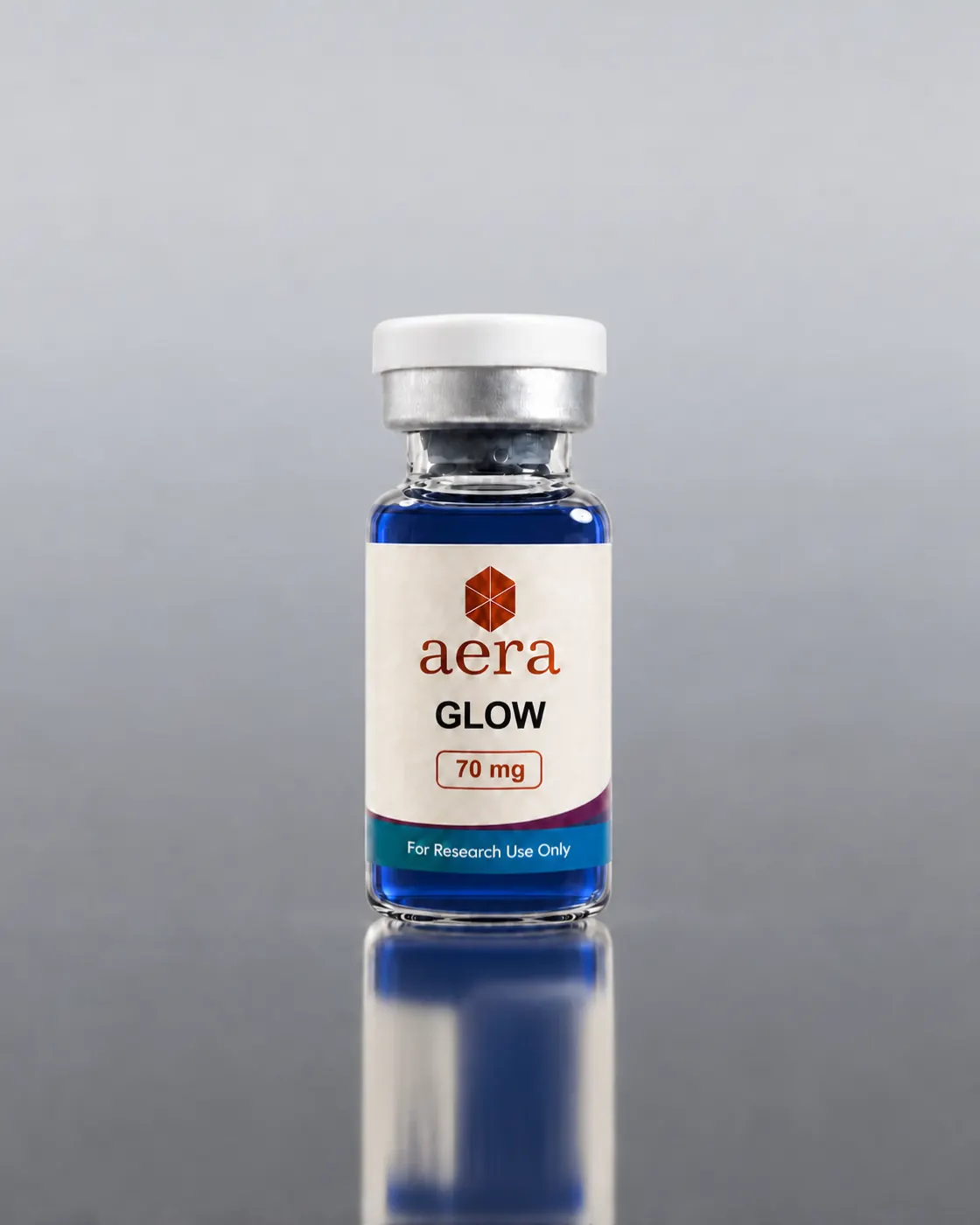
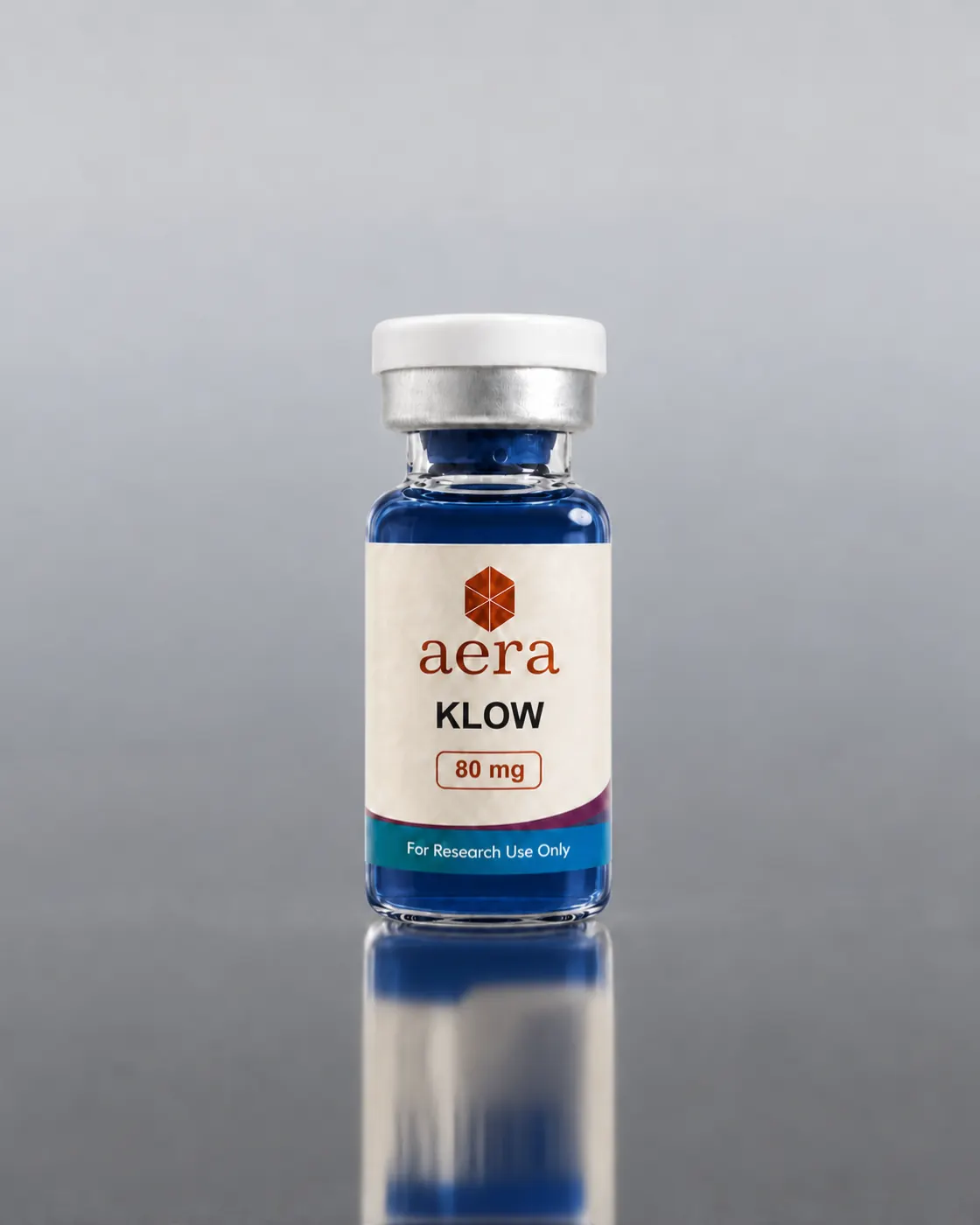
GHK-Cu also appears in two multi-peptide research blends Friday stocks: Glow, which combines GHK-Cu with BPC-157 and TB-500, and Klow, which adds KPV. Both are studied in collagen and tissue-repair pathway models.
Labs reconstitute GHK-Cu before use, commonly with bacteriostatic water. A reconstituted solution should be clear and blue; cloudiness or particles are a sign to check the batch.
Purity, colour and storage
For a copper complex, a certificate of analysis should confirm the identity of the peptide (mass spectrometry) and its purity and content (HPLC). The blue colour alone does not prove identity: other copper salts are blue too. Every vial Friday stocks is lab-tested by batch, and we can share a batch's report on request.
Store sealed vials refrigerated (2-8 °C), dry and away from light, or frozen for longer storage. Copper peptides are sensitive to some other ingredients in solution, which matters in formulation research. Reconstituted solutions are kept refrigerated and used within a short period.
Buying GHK-Cu from Friday
GHK-Cu is listed at ฿1,090 on the product page, with other skin-research compounds in the Glow section of the shop. Orders are packed in Bangkok and leave with tracking the next working day, to any address in Thailand. Delivery is a flat ฿60, prices are in Thai baht, and payment is by bank transfer with a slip that our team confirms before dispatch.
New to buying research peptides in Thailand? Read our buyer's guide first.
In the shop
Questions
What is GHK-Cu?
GHK-Cu is the copper complex of GHK, a naturally occurring tripeptide (glycyl-L-histidyl-L-lysine) first isolated from human plasma in 1973. It is studied mainly in skin, collagen and tissue-repair research.
Why is GHK-Cu blue?
Because of the bound copper(II) ion. GHK-Cu powder and solutions are characteristically blue. Colour alone does not confirm identity, so check the batch's certificate of analysis.
Is research GHK-Cu the same as a copper peptide serum?
No. Cosmetic serums are finished formulations that list the ingredient as copper tripeptide-1. Research GHK-Cu is the raw lyophilised peptide, supplied for laboratory, formulation and analytical work.
What GHK-Cu products does Friday stock?
GHK-Cu on its own, in 100mg (฿1,090) vial, and the Glow and Klow research blends, which contain GHK-Cu with other peptides.
Related guides
Sources
- Pickart L, Vasquez-Soltero JM, Margolina A. GHK peptide as a natural modulator of multiple cellular pathways in skin regeneration. BioMed Res Int 2015:648108. doi:10.1155/2015/648108
- Pickart L, Margolina A. Regenerative and protective actions of the GHK-Cu peptide in the light of the new gene data. Int J Mol Sci 2018;19(7):1987. doi:10.3390/ijms19071987