

How to reconstitute research peptides
Laboratory handling for lyophilised peptides: choosing a solvent, the steps, working out concentration, and storing the solution. No human-use advice.
How do you reconstitute a lyophilised peptide?
Short answer: in the lab, a lyophilised peptide is reconstituted by adding a measured volume of sterile solvent, most often bacteriostatic water, slowly down the inside wall of the vial, then swirling or rolling it gently until the powder dissolves. Do not shake it. Label the vial with the compound, concentration and date, and keep it refrigerated at 2-8 °C. This guide covers laboratory handling only, not human or animal use.
What do you need?
- the sealed peptide vial, at room temperature;
- a sterile solvent, such as bacteriostatic water;
- 70% isopropyl alcohol swabs;
- a sterile, graduated syringe or pipette to measure the solvent;
- gloves, a clean work surface, labels and a fridge.
Which solvent should a lab use?
| Solvent | What it is | Typical lab use | Notes |
|---|---|---|---|
| Bacteriostatic water | Sterile water with 0.9% benzyl alcohol as a preservative | Vials that will be punctured more than once | The preservative slows bacterial growth; not suitable for every assay or cell culture |
| Sterile water | Sterile water, no preservative | Single-use preparations | Use promptly once opened |
| Dilute acetic acid (about 0.1%) | Weak acid in sterile water | Peptides that dissolve poorly in plain water | Check the peptide's charge and solubility data first |
| Assay buffer | The buffer used in the experiment | Diluting a stock solution | Make the stock in water first; salts can make some peptides harder to dissolve |
Lab suppliers generally advise trying the mildest solvent first on a small portion, because a peptide dissolved in the wrong solvent is hard to recover.
What are the steps?
- Let a cold vial reach room temperature before opening it, so moisture does not condense on the powder.
- Wipe the rubber stoppers of the peptide vial and the solvent vial with an alcohol swab and let them dry.
- Measure the planned volume of solvent with a sterile syringe or pipette.
- Add it slowly, letting it run down the inside wall of the vial rather than onto the powder.
- Swirl or roll the vial gently until the solution is clear. Shaking causes foaming and can damage or aggregate some peptides.
- Inspect it: the solution should be clear with no particles. A cloudy or gel-like solution means the peptide has not fully dissolved.
- Label the vial with compound, concentration, solvent, date and initials.
- Return it to the fridge.
How do you work out the concentration?
Concentration is the peptide content of the vial divided by the volume of solvent. A 10 mg vial made up with 2 mL of solvent gives 5 mg/mL; the same vial with 4 mL gives 2.5 mg/mL. Choose a volume that suits the analytical method, record it in the lab notebook and write it on the label. The peptide content in mg is printed on every Friday vial and shown on each product page. Friday does not give guidance on amounts for any human or animal use.
How long does a reconstituted peptide keep?
Far less long than the powder. Lab supplier guidance is that many peptide solutions keep for up to about a week at 4 °C, and that longer storage means freezing single-use aliquots at -20 °C or colder, avoiding repeated freeze-thaw cycles. Peptides containing cysteine, methionine, tryptophan, asparagine or glutamine are less stable in solution, and alkaline pH speeds up breakdown. Keep solutions out of light.
Sealed lyophilised vials are much more robust: refrigerate them on arrival, keep them dry, and freeze them for storage over several months. Our peptide delivery guide covers what happens in transit.
Where do Friday's supplies fit in?
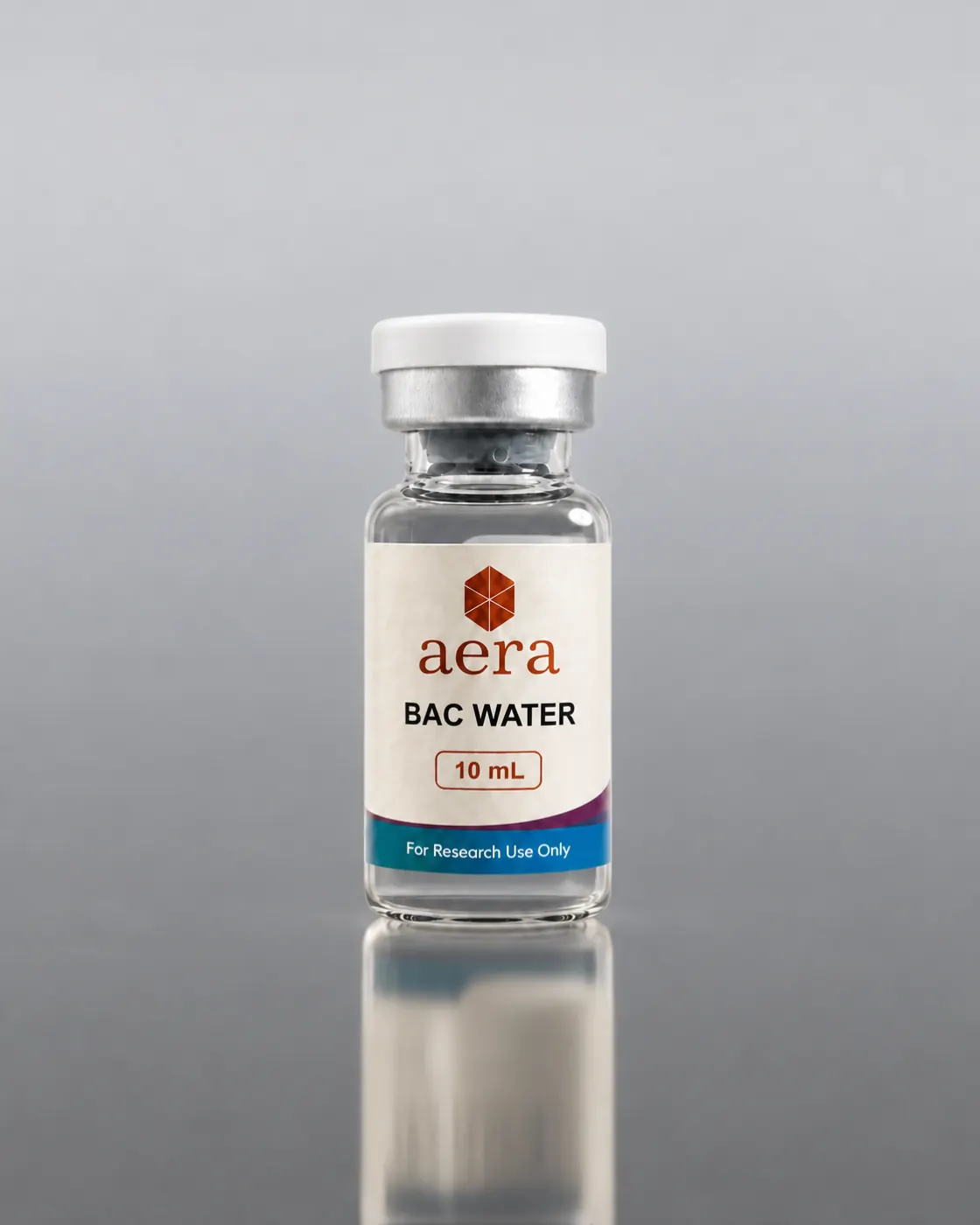
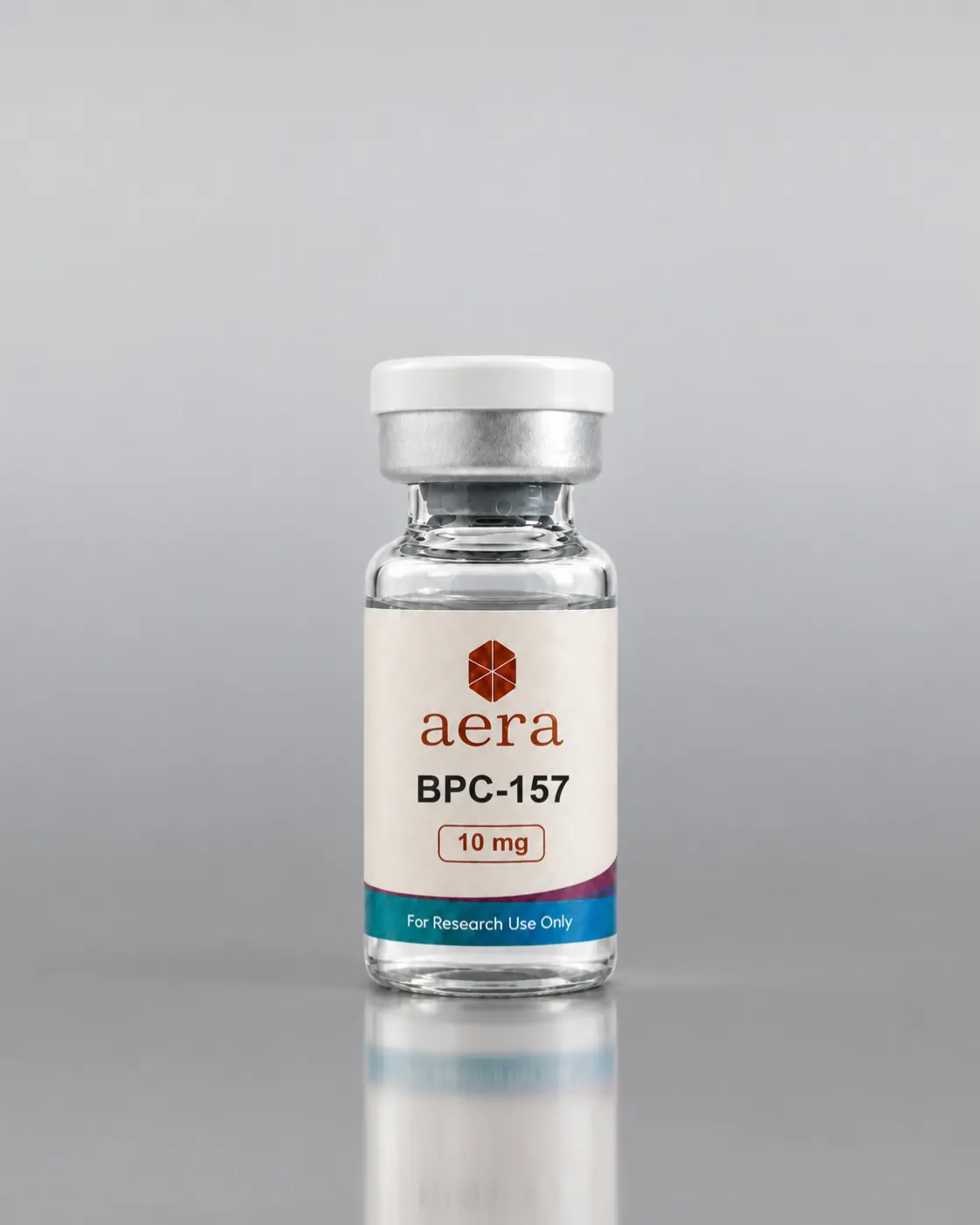
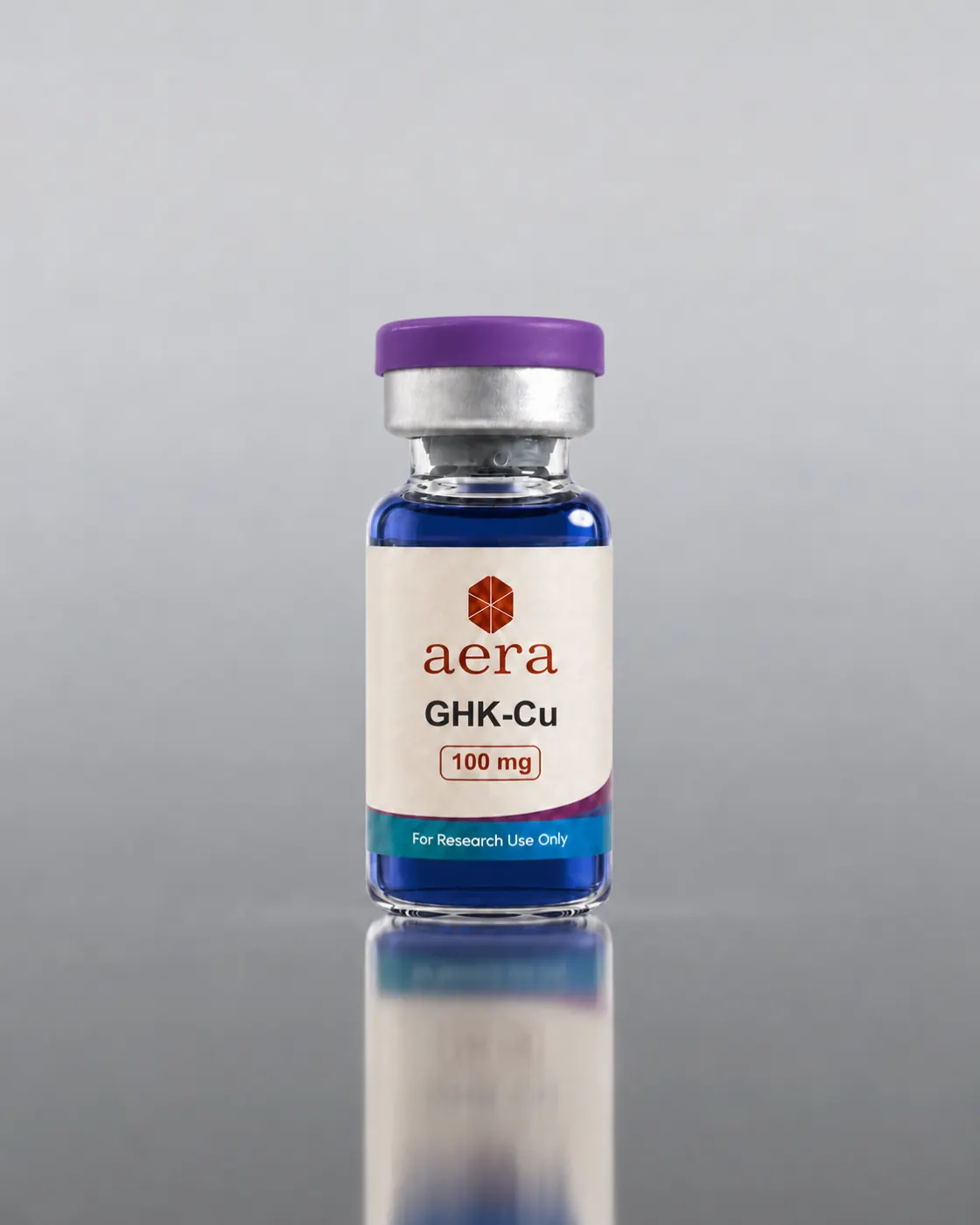
Friday sells bacteriostatic water (10mL (฿300) vial) alongside its lyophilised research peptides, such as BPC-157 and GHK-Cu, all on the catalogue. Third-party tested. Research use only.
In the catalogue
Questions
Should you shake a peptide vial to dissolve it?
No. Swirl or roll it gently. Shaking causes foaming and can damage or aggregate some peptides.
Bacteriostatic water or sterile water?
Labs use bacteriostatic water, which contains 0.9% benzyl alcohol, for vials punctured more than once, and plain sterile water for single-use preparations or where the preservative would interfere with the assay.
Why is a reconstituted peptide cloudy?
Cloudiness or visible particles mean the peptide has not fully dissolved and is suspended, not in solution. A different solvent may be needed; check the peptide's solubility data.
Can reconstituted peptides be frozen?
Lab guidance is to freeze single-use aliquots at -20 °C or colder for longer storage and to avoid repeated freeze-thaw cycles.
Does Friday give advice on amounts for personal use?
No. Friday sells research peptides for laboratory use only and does not give medical, personal-use or amount guidance.
Related guides
Sources
- Sigma-Aldrich (Merck): handling and storage guidelines for peptides and proteins. sigmaaldrich.com
- Sigma-Aldrich: peptide handling guide (solubility and storage of peptide solutions). sigmaaldrich.com
- DailyMed (U.S. National Library of Medicine): bacteriostatic water label, 0.9% benzyl alcohol. dailymed.nlm.nih.gov